As we start 2026, the novelty of AI has faded into a new reality. It has reshaped user expectations already and is driving how websites function. Today’s web design is no longer about flash, but a relentless focus on speed, usability, and authenticity.
Here are actionable insights our design team learned in 2025 and the trends defining the web in 2026.
Key Takeaways From Our Website Design Experts:
Speed and accessibility must be built into the design from day one
Why Website Speed & Accessibility Are Non-Negotiable in 2026
Looking back at the dozens of sites we designed and developed in 2025, two major shifts changed our workflow.
First, websitespeed is no longer a technical task at the end of the project. It is now a primary consideration in the design phase. We’ve stopped designing heavy, image-bloated layouts that need to be updated within the year or fixed to improve performance later. Instead, we build with speed and performance in mind from day one.
Second, we’ve moved to an accessibility-first mindset. In the past, many agencies treated accessibility as something you add with a plugin after the site is live. In 2026, we build accessibility into the structure from the start. It’s better for the user, better for SEO, and it’s just the right way to build.
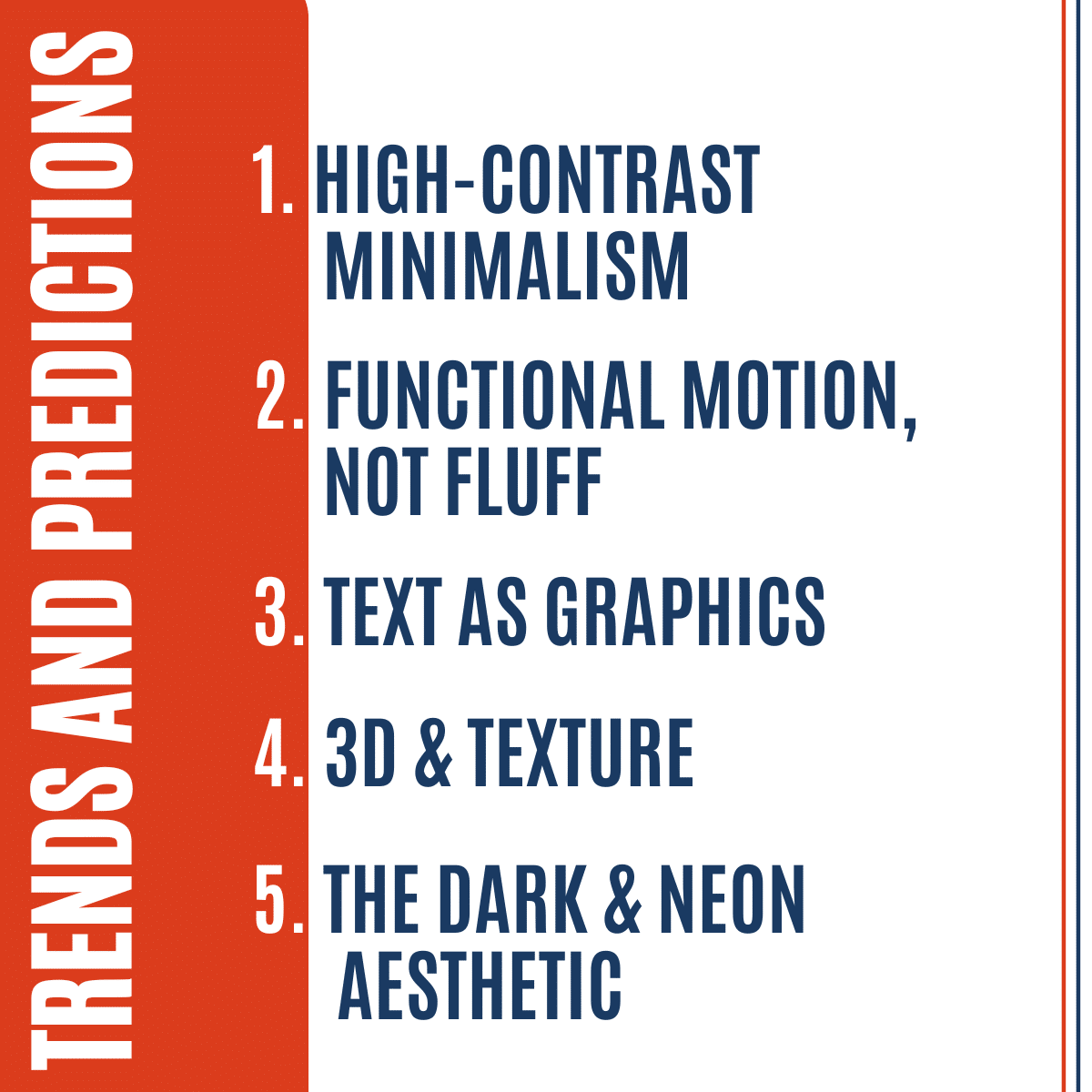
Top Website Design Trends and Predictions For 2026
In a world flooded with AI-generated perfection, users are starting to crave rawness and authenticity. This has led to a few key visual shifts:
1. High-Contrast Minimalism
We are seeing a rise in minimalist design elements where less is more takes on a bolder meaning. Think high contrast, stark backgrounds, and bold graphics. The goal is a no-nonsense feel: Get in, get what you came for, and get on with your day.
2. Functional Motion, Not Fluff
People still want animation, but they have zero patience for anything that slows them down. We’re focusing on simple motion design. This involves content that appears as you scroll or elements that change color on hover. It adds a premium feel without stopping the scroll or interrupting the user experience.
3. Text as Graphics
To keep sites blazing fast for Search and AI bots as well as human users, we’re using intentional bold text as a primary design element. By using typography to replace heavy images, we give the site a cool, modern look without sacrificing speed, load time, and crawl budget.
4. 3D & Texture
The flat icons of the 2010s are officially out. We’re moving toward 3D elements and realistic textures, such as frosted glass overlays or deep color gradients, that make a site feel real.
5. The Dark & Neon Aesthetic
The clean, white background sites will still be trending, but expect to see more dark-themed websites with neon call-to-actions. It’s a simple way to stand out without needing complex new design elements.
What Users Expect From Websites in 2026: Make It Simple.
1. Text & Content Simplicity
While there is a strong push to keep things visually clean, true simplicity isn’t about having less information—it’s about making that information effortless to digest. We’ve mastered a middle ground where text is treated as a dynamic design element. By using strategic layouts and intentional typography, we ensure the page remains deep enough for search engines to index while staying fast and friction-free for human readers. It’s about being concise and clear, not empty.
2. Engagement Through Video
Instead of forcing visitors to read through dense technical specs, websites are incorporating videos to improve the user experience. Video keeps users on the page longer and builds trust much faster than text alone. For a recent manufacturing client, we saw a spike in engagement by moving their YouTube library directly into the design, placing a featured video at the top of every key service page.
3. AIO (AI Optimization)
We are now designing with AI bots in mind. For example, using accordions for FAQ sections isn’t just for user experience; it’s because AI bots prefer that specific question-and-answer format for their summaries. Additionally, older themes like Divi or Elementor can become bloated and slow. We recommend using a leaner theme, making it easier for search engines to index and AI bots to read, without sacrificing customization or functionality.
4. Authentic Images to Build Trust
As AI makes it easier to fake testimonials and photos, real faces matter. We are pushing clients to use real employee headshots and photos whenever possible, even if they are not perfect.
Will AI Homogenize Website Design?
There is a real fear in the industry that AI will lead to all websites looking alike and lacking creativity. However, we believe there will be a counter-movement. While AI might try to copy authentic aesthetics, it can’t replace human creativity. No business owner wants their brand to look like a template. They want to stand out. Our job in 2026 is to be creative within the box that AI and search engines create for us. Aesthetics might be shifting toward utility, but authenticity is the only thing AI can’t fake.