
How Businesses Can Win With Google Ads in 2026 Using AI
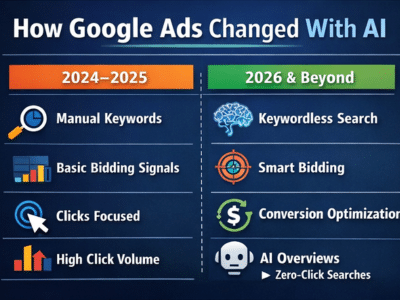
In 2025, the digital advertising world hit a massive turning point. It was the year “AI-first” stopped being a buzzword and became the standard. Looking back, it’s clear that the businesses that thrived weren’t the ones that just flipped a switch and walked away to let AI make all the decisions. They were the businesses that figured out how to balance automation with human oversight.
Here is the reality of how the Google search ads landscape has shifted and what you need to do to stay competitive in the “zero-click” era of 2026.
Key Takeaways From Our Google Ads Experts:
- AI works best with human guardrails. Automation improves performance when campaigns are tightly structured and monitored.
- Broad match needs control to stay profitable. Intent-driven setup and strong negative keywords are essential.
- Accurate conversion tracking is critical. Smart Bidding only performs when it’s optimized for real business outcomes.
- Lead quality beats click volume. Fewer, higher-intent clicks drive better ROI in a zero-click search world.
- Trust and transparency win clicks. Clear pricing, strong reviews, and specific ad messaging matter more than ever.
Table of Contents:
- Why 2025 Changed Google Ads Forever
- How to Run Profitable Google Ads Campaigns in 2026
- How AI Overviews and Zero-Click Searches Affect Google Ads in 2026
- How to Build Trust With Google Ads in an AI-Driven Search Experience
- How to Optimize Your Google Ads Account for 2026 (Next Steps)
Why 2025 Changed Google Ads Forever (AI, Smart Bidding & Broad Match)

| Broad Match Targeting Increased Conversions 500%
Launching a broad match keyword targeting strategy with a robust negative keyword list and intent focused ad copy for a local lawyer increased conversions 500% and reduced the cost per conversion 70% in the second half of 2025 compared to 2024. |
| Accurate Conversion Tracking Increased Phone Calls From 1 to 12 Per Month By shifting a client’s AI campaign from optimizing for “page views” to tracking high-value phone calls, we increased their monthly leads from 1 to 12. This simple correction gave the AI the right signals to find actual customers, allowing the company to sustain growth even during their traditional off-season. |
How to Run Profitable Google Ads Campaigns in 2026
In 2026, the strategy has shifted from chasing the new features to mastering fundamentals. The most successful accounts right now aren’t necessarily using the newest beta tools. They are the ones with the cleanest tracking and the most focused targeting.
One of the biggest takeaways from last year is that lead quality matters more than volume. This is especially true for local businesses. Chasing a high volume of cheap clicks is a losing game when those clicks don’t turn into revenue. Furthermore, your landing page is now a make-or-break factor. As clicks become more expensive and users make decisions faster, a slow or confusing user experience will kill your ROI before the customer even reads your ad.
How AI Overviews and Zero-Click Searches Affect Google Ads in 2026

While total click volume might be down, the intent of the users who do click is higher than ever. These users have already done their research via the AI summary and are now looking for a specific provider. This means your ads have to communicate your unique value instantly. You aren’t just competing for a click anymore; you’re competing for trust in a split second.
How to Build Trust With Google Ads in an AI-Driven Search Experience
We’re seeing a huge shift toward pricing transparency. AI Overviews have started presenting price ranges and contract expectations directly in the search results. If you are upfront about your costs and value, you’ll build trust faster and stand out when users are comparing options. In this environment, your reviews and personal branding are what prevent your business from feeling like a generic, interchangeable option.
Because users are getting so much information upfront from AI summaries, your ad copy needs to work harder to bridge the gap between a “search” and a “click.” Instead of using vague catchphrases like “Top-Rated Service,” your headlines should address the specific anxieties or requirements a customer has right now—think “Upfront Pricing with No Hidden Fees” or “24/7 Response for Local Emergencies.” Modern searchers want to see their specific needs reflected back at them immediately. If your ad speaks directly to the outcome they want and the price they expect, you’ll earn the click over a competitor who is still using generic, one-size-fits-all messaging.
How to Optimize Your Google Ads Account for 2026 (Next Steps)
Local businesses that refuse to adapt are finding it harder to explain their results. While their ads might still run, the lack of clear conversion tracking and an ad structure that works with AI makes performance inconsistent.
If you don’t have a strong brand presence or clear trust signals, potential customers will simply choose the competitor who does. The businesses that adapted early are showing up in those high-intent moments and winning the attention first. Successful 2026 Google ad campaigns will provide AI with the structure and data it needs to bring in high-intent, valuable customers.